How to Stop Procrastinating When You Keep Putting Things Off
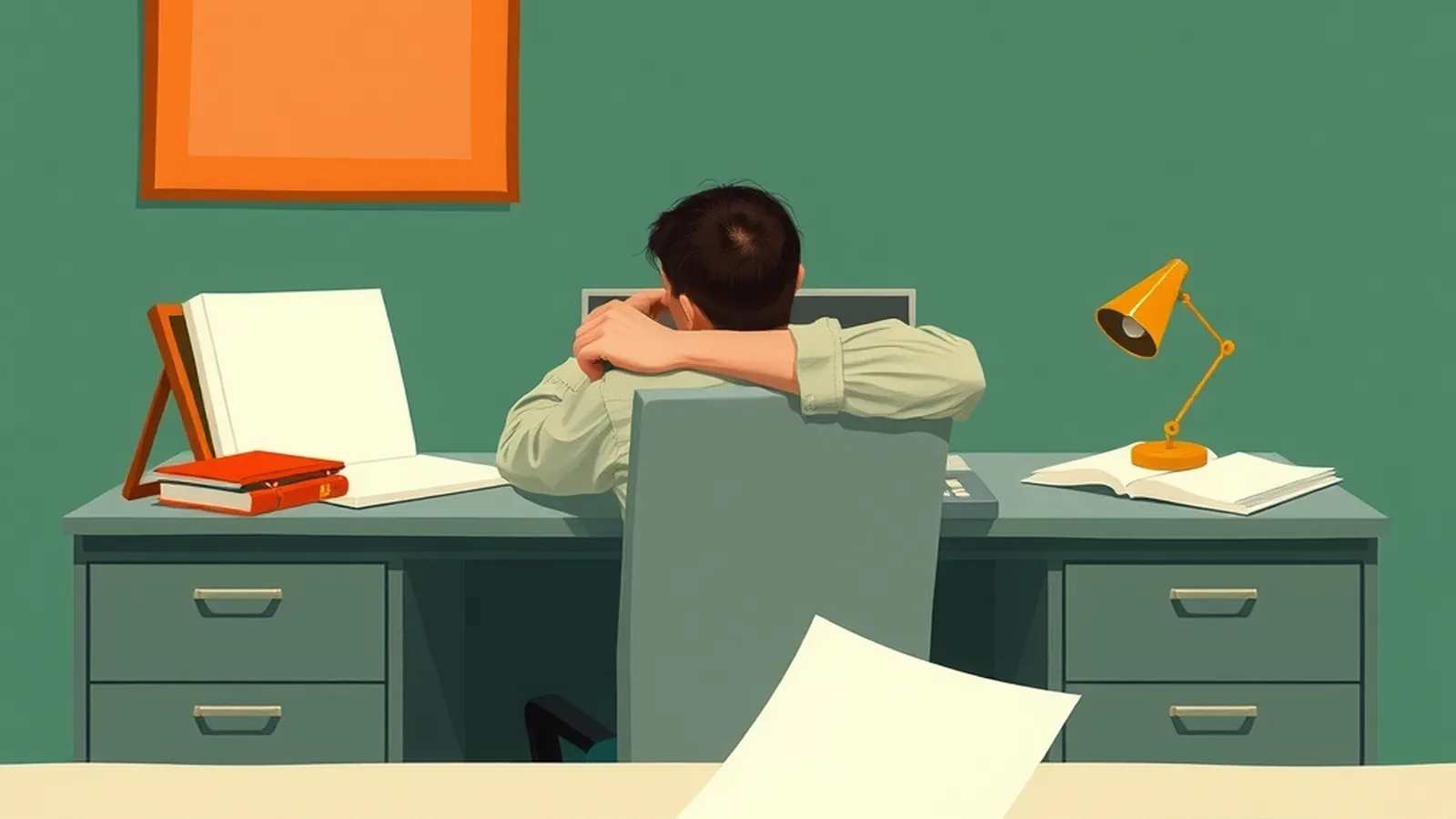
To stop procrastinating, treat it as a feeling problem first and a time problem second. Most delay happens because a task stirs up something unpleasant, like boredom, confusion or worry about doing it badly, and avoiding it brings quick relief. The fix is to make starting feel smaller and safer, then let momentum do some of the work.
You'll find more help getting started in Focus & Productivity. If you've read plenty of advice and still find yourself reorganizing your desk instead of writing the report, you're in good company. That pattern is common, and it says nothing bad about your character.
Why you procrastinate on things you care about
Psychologists who study procrastination generally describe it as a way of managing emotions. The task in front of you feels heavy. Scrolling, snacking or tidying feels lighter. Your brain picks the lighter option because it brings relief right now, even though the cost shows up later as stress.
That's why "try harder" rarely helps. The task often triggers one of a few feelings:
- Uncertainty: You don't know where to begin, so you don't.
- Fear of judgment: The work will be seen, graded or compared, and you worry it won't measure up.
- Boredom: The task is dull, and nearly anything else is more interesting.
- Overwhelm: The task is so big that every part of it feels urgent and unclear at once.
- Resentment: You didn't choose this task, and part of you is pushing back.
Spotting which feeling is in charge tells you which tactic to reach for. Uncertainty needs a clearer first step. Fear needs lower stakes. Boredom needs a time limit. Overwhelm needs a smaller slice.
If fear of being "found out" is the main driver, our guide to imposter syndrome covers that pattern in more depth, since perfectionism and procrastination often travel together.
When it's more than a habit
Some people find starting tasks harder because of something going on in their body or brain. ADHD, depression, burnout and sleep problems can all affect your ability to begin and keep going. These are health issues, not a lack of willpower. If procrastination is hurting your work, school or relationships, or if you also feel low or exhausted most days, talking with a doctor is a sensible step.
Rest matters here too. Sometimes "procrastination" is your body asking for a break you've been skipping. Taking real time off is not a failure.
Six tactics for getting started
1. Shrink the first step until it feels easy
"Write the grant proposal" is a project. "Open the document and type the heading" is a step. Keep shrinking until the step feels almost silly. You can always do more once you've begun.
2. Use a short, bounded start
Agree to work for 10 minutes, then let yourself stop. A fixed endpoint makes the task feel less endless. If you'd like a structured version of this, the Pomodoro Technique turns short timed rounds into a full method, and it works well for people who stall at the start.
3. Lower the bar on purpose
Give yourself permission to make a rough first pass. Call it "draft zero" or "the ugly version." When the goal is "something on the page" rather than "something good," the fear of judgment loosens its grip.
4. Make the task harder to avoid
Remove the escape routes before you sit down. Close extra browser tabs, put your phone in another room, or work somewhere with fewer temptations. Our guide on how to focus goes deeper on setting up your space and handling distractions once you've started.
5. Plan the "when" and "where"
A vague plan like "I'll do it this week" gives procrastination lots of room. An if-then plan, such as "If it's 9 a.m. Tuesday, I'll open the budget file at the kitchen table," removes a decision. Research on these plans, often called implementation intentions, generally finds they help people follow through.
6. Check whether the task deserves your time
Sometimes you avoid a task because, deep down, it doesn't matter much. Sorting your list with the Eisenhower Matrix can show which tasks are truly important, which can be handed off, and which you can drop without guilt.
A worked example
Priya, a freelance designer, has been avoiding her quarterly tax paperwork for three weeks. Every time she thinks about it, she feels a knot in her stomach and opens her email instead.
Here's how she uses the tactics:
- Name the feeling: She notices it's mostly uncertainty. She isn't sure which receipts she needs.
- Shrink the step: Her first step becomes "Find the folder where I saved receipts."
- Bound the time: She sets a 10-minute timer.
- Remove escape routes: She closes her inbox and silences notifications.
- Plan the next start: Before stopping, she writes, "Tomorrow at 8:30, I'll sort the receipts into three piles."
She doesn't finish the paperwork that day. But she has started, and the next session already has a clear first move.
A script for the moment you want to bail
When you notice yourself drifting away from a task, try saying this to yourself, quietly or on paper:
Naming the feeling won't make it vanish. It does give you a moment of choice between the feeling and the escape.
About the "unfinished task" idea
You may have heard that starting a task makes your mind want to finish it. This idea is linked to the Zeigarnik effect, named for the psychologist Bluma Zeigarnik, who reported in the 1920s that people remembered unfinished tasks better than finished ones. Later attempts to repeat her findings have had mixed results, so treat it as a helpful thought rather than a rule. Still, many people find that once a task is open, coming back to it feels easier.
What to do after a bad day
You'll have days when you avoid the task anyway. That's part of the process. Instead of piling on criticism, ask two questions:
- What feeling was I avoiding?
- What's one smaller step I can try tomorrow?
Harsh self-talk tends to make the next start feel even heavier. A calm review keeps the door open.
Try this today
Pick one task you've been putting off. Then:
- Write down the feeling it brings up, in one word.
- Write the smallest possible first action.
- Set a timer for 10 minutes.
- Close one distraction before you start.
- When the timer ends, write your next first step for tomorrow.
None of this will cure procrastination. Nothing does. But it gives you a reliable way to begin, and beginning is where most of the struggle lives.
Want a structured program to keep you on track?
Reading gives you the ideas. Some people stick with change better when they follow a guided course day by day. This button opens a self-improvement program from one of our advertising partners.
See the partner program →We may be paid when you click. The program shown can change. Read its terms before you buy anything. How this works
Frequently asked questions
Is procrastination a sign of laziness?
Usually not. Most people who procrastinate care about the task and are avoiding an uncomfortable feeling linked to it, such as boredom, confusion or fear of doing it badly.
How do I stop procrastinating right now?
Name the very first physical action, set a timer for 10 minutes, and agree to stop when it rings. Starting is often the hardest part, and a short, bounded start lowers the stakes.
Can ADHD cause procrastination?
ADHD, depression, burnout and sleep problems can all make it harder to start and finish tasks. If putting things off is causing real trouble, it's worth raising with a doctor.